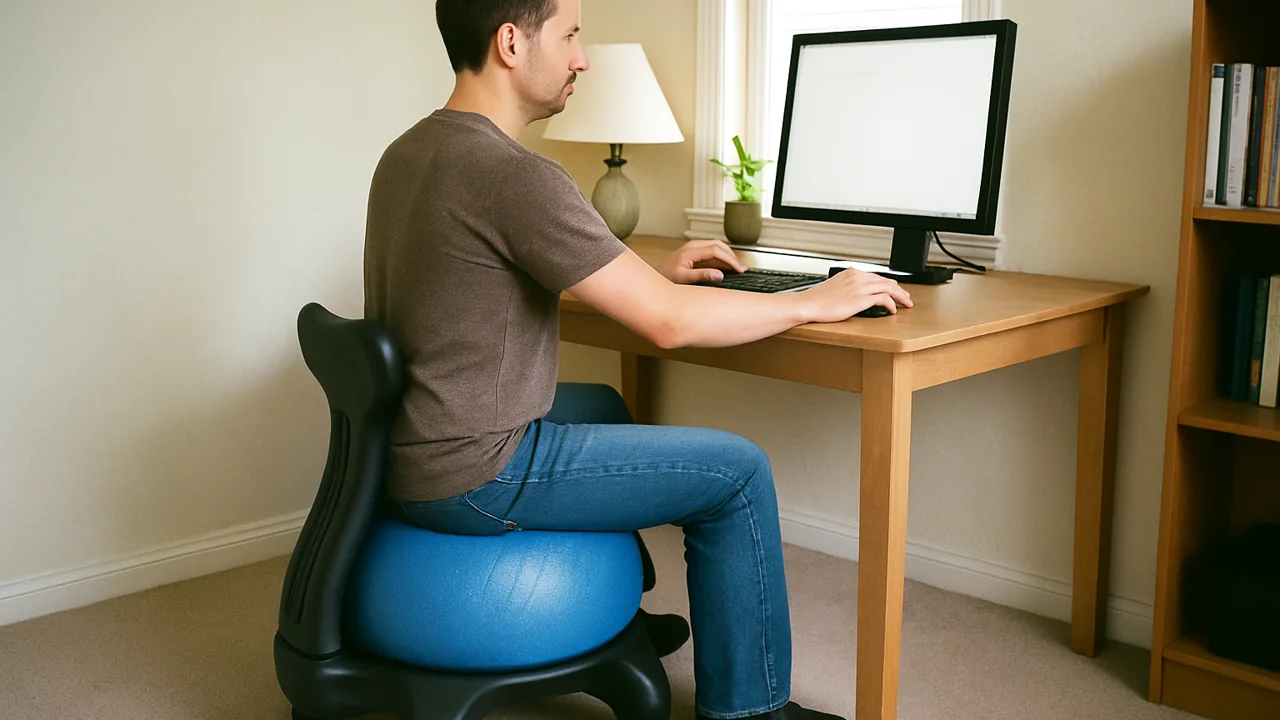
In a real workday, desk fit and posture setup is less about chasing a perfect posture pose and more about removing small annoyances before they stack up. I like to picture someone opening a laptop after lunch, noticing the shoulders creeping upward, and then making one modest adjustment instead of rebuilding the whole office. A balance ball chair can support that kind of active sitting, but only when the seat height, base, floor surface, and break routine match the person using it. This guide keeps the advice practical: test one change, sit for a short block, stand up, and notice whether your body feels calmer or more distracted. Manufacturer guidance still matters, especially for inflation limits, weight ratings, and safe use around children or pets.
1. Start with the everyday problem
In a real workday, Start with the everyday problem is less about chasing a perfect posture pose and more about removing small annoyances before they stack up. I like to picture someone opening a laptop after lunch, noticing the shoulders creeping upward, and then making one modest adjustment instead of rebuilding the whole office. A balance ball chair can support that kind of active sitting, but only when the seat height, base, floor surface, and break routine match the person using it. This guide keeps the advice practical: test one change, sit for a short block, stand up, and notice whether your body feels calmer or more distracted. Manufacturer guidance still matters, especially for inflation limits, weight ratings, and safe use around children or pets.
2. Measure before you buy
In a real workday, Measure before you buy is less about chasing a perfect posture pose and more about removing small annoyances before they stack up. I like to picture someone opening a laptop after lunch, noticing the shoulders creeping upward, and then making one modest adjustment instead of rebuilding the whole office. A balance ball chair can support that kind of active sitting, but only when the seat height, base, floor surface, and break routine match the person using it. This guide keeps the advice practical: test one change, sit for a short block, stand up, and notice whether your body feels calmer or more distracted. Manufacturer guidance still matters, especially for inflation limits, weight ratings, and safe use around children or pets.
3. Test the chair in short blocks
In a real workday, Test the chair in short blocks is less about chasing a perfect posture pose and more about removing small annoyances before they stack up. I like to picture someone opening a laptop after lunch, noticing the shoulders creeping upward, and then making one modest adjustment instead of rebuilding the whole office. A balance ball chair can support that kind of active sitting, but only when the seat height, base, floor surface, and break routine match the person using it. This guide keeps the advice practical: test one change, sit for a short block, stand up, and notice whether your body feels calmer or more distracted. Manufacturer guidance still matters, especially for inflation limits, weight ratings, and safe use around children or pets.
- Set a timer for a short first session.
- Keep both feet grounded before adding movement.
- Switch seats if you feel distracted or strained.
- Check inflation and base stability weekly.
4. Watch for small safety cues
In a real workday, Watch for small safety cues is less about chasing a perfect posture pose and more about removing small annoyances before they stack up. I like to picture someone opening a laptop after lunch, noticing the shoulders creeping upward, and then making one modest adjustment instead of rebuilding the whole office. A balance ball chair can support that kind of active sitting, but only when the seat height, base, floor surface, and break routine match the person using it. This guide keeps the advice practical: test one change, sit for a short block, stand up, and notice whether your body feels calmer or more distracted. Manufacturer guidance still matters, especially for inflation limits, weight ratings, and safe use around children or pets.
5. Adjust the routine over time
In a real workday, Adjust the routine over time is less about chasing a perfect posture pose and more about removing small annoyances before they stack up. I like to picture someone opening a laptop after lunch, noticing the shoulders creeping upward, and then making one modest adjustment instead of rebuilding the whole office. A balance ball chair can support that kind of active sitting, but only when the seat height, base, floor surface, and break routine match the person using it. This guide keeps the advice practical: test one change, sit for a short block, stand up, and notice whether your body feels calmer or more distracted. Manufacturer guidance still matters, especially for inflation limits, weight ratings, and safe use around children or pets.
6. Mistakes to avoid
In a real workday, Mistakes to avoid is less about chasing a perfect posture pose and more about removing small annoyances before they stack up. I like to picture someone opening a laptop after lunch, noticing the shoulders creeping upward, and then making one modest adjustment instead of rebuilding the whole office. A balance ball chair can support that kind of active sitting, but only when the seat height, base, floor surface, and break routine match the person using it. This guide keeps the advice practical: test one change, sit for a short block, stand up, and notice whether your body feels calmer or more distracted. Manufacturer guidance still matters, especially for inflation limits, weight ratings, and safe use around children or pets.
Quick checklist
- Desk height feels natural.
- Feet rest securely.
- The base does not skate across the floor.
- The manual supports your planned use.
FAQ
Should beginners use it all day?
No, start small and rotate seats.
What if it feels unstable?
Stop and review inflation, base, and floor surface.
Can it help focus?
Some people like the movement, while others find it distracting.
Is the base important?
Yes, it is often what makes the setup feel desk-friendly.
Should I ignore discomfort?
No. Discomfort is a reason to pause and reassess.
Practical closing notes before you decide
A balance ball chair is easiest to judge when you treat it as a small workspace experiment rather than a magic fix. Put it where you normally work, keep your regular chair nearby, and notice what happens during ordinary tasks: typing a long message, joining a call, reading something dense, or sorting papers. If the chair helps you sit a little more alert without stealing attention, it may earn a place in the rotation. If it makes you tense, wobbly, or preoccupied, the best decision may be a different active-seating style.
The most useful buyer habit is to separate comfort from novelty. A new chair can feel interesting for a few minutes simply because it is different. Real fit shows up after repeated short sessions, careful inflation checks, and a desk height that lets your shoulders relax. Keep the floor clear, avoid dramatic bouncing at a work surface, and follow the manufacturer’s limits. Small, steady choices usually make active sitting safer and more sustainable than big promises.
When comparing models, write down the room, floor type, desk height, and sitting blocks you expect to use. That simple note often reveals whether you need a wider base, lockable movement, a washable cover, or a more traditional ergonomic chair instead. Good seating should support the work, not become the work.